
BASE & Skydiving Canopy Handling
5-Day Intensive Skills Course
This is a paragliding-based canopy course. No prior airsports experience is required.
The program is designed for people interested in BASE jumping and/or skydiving. We teach complete novices alongside experienced jumpers, including BASE athletes with decades in the sport. Regardless of your background, you will leave with practical, usable skills that immediately improve how you understand and fly a canopy.
Why This Course Exists
Most BASE jumpers and skydivers spend years jumping, yet accumulate only a few hours of deliberate canopy training. Emergency procedures are often learned through photos, diagrams, and video—but real emergencies don’t happen on a screen.
What if you could train those emergencies in a controlled, non-risk environment?
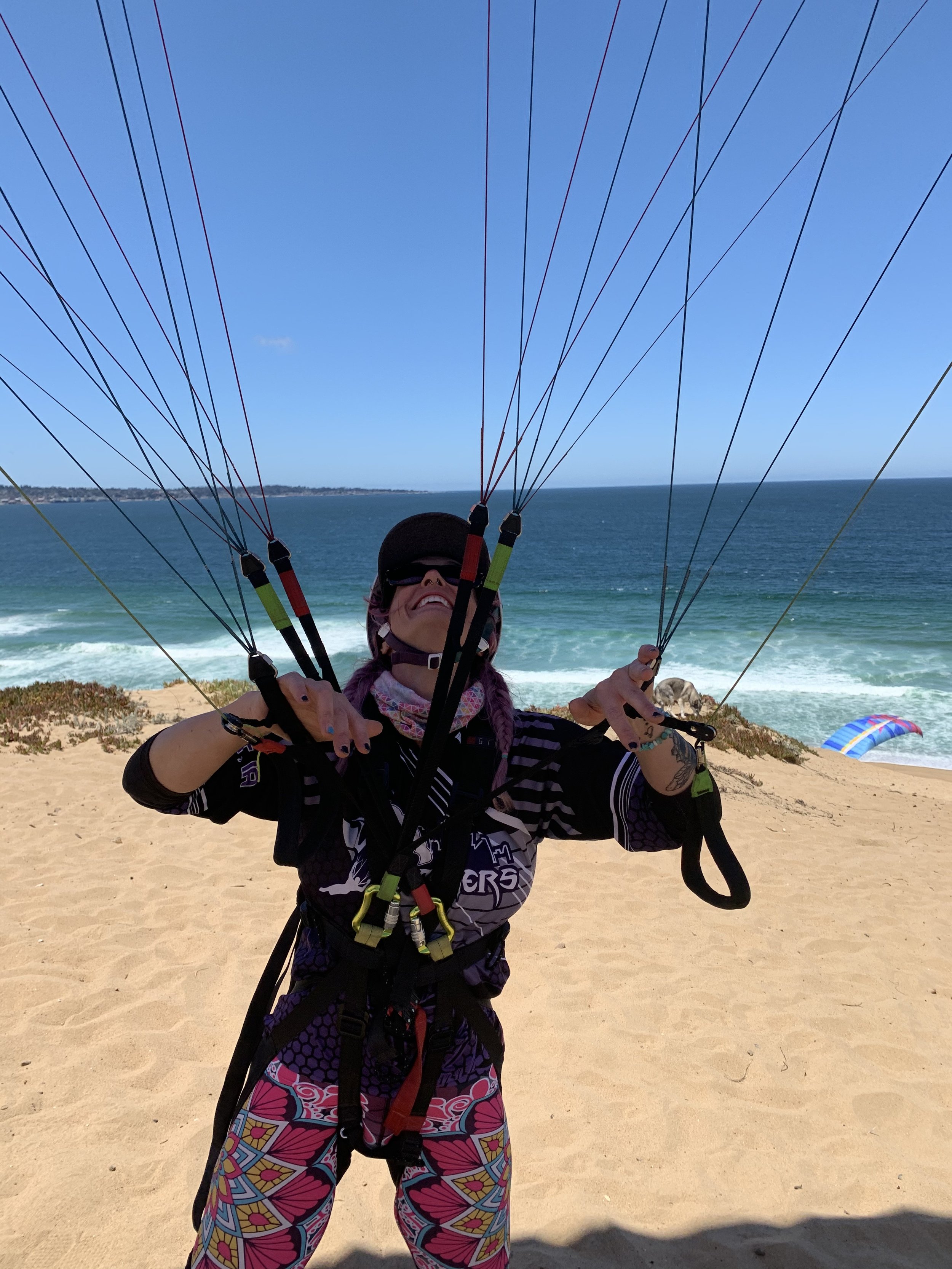
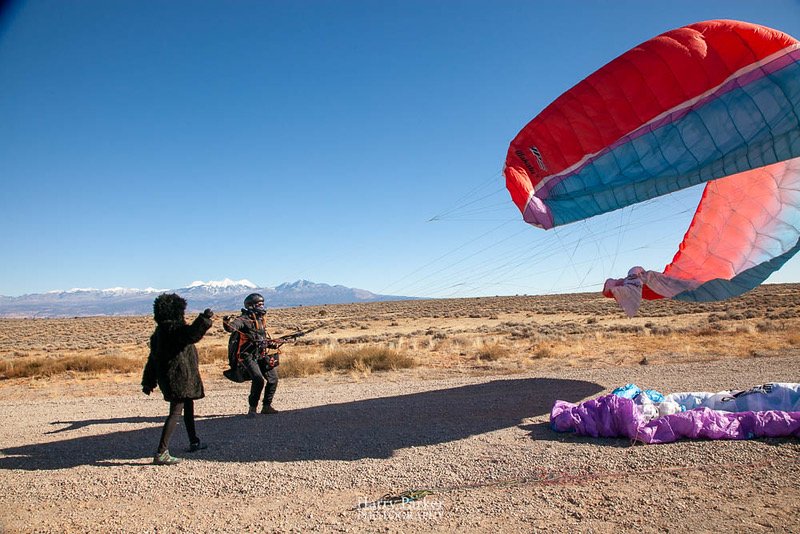
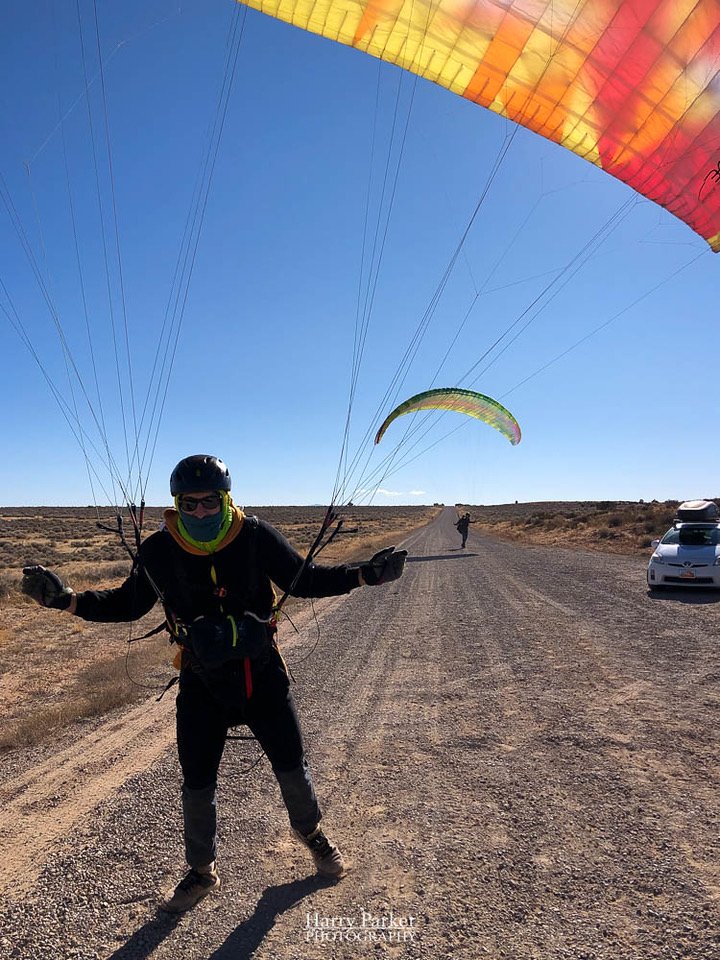
In this course, you work hands-on with an actual canopy, risers, and brake lines— safely on the ground. You build familiarity with how your system responds to input, learning how pressure, movement, and timing translate into canopy behavior. This allows you to develop muscle memory and understanding without the consequences of making a mistake at altitude.
When something goes wrong after opening, there is rarely time to think. The environment is fast, high-adrenaline, and often violent. Decisions must be made immediately, under stress, with limited margin for error.
This course is designed to prepare you for when things don’t go perfectly. It builds deep familiarity with the parachute system so that when you are facing line twists or being flown backward toward a cliff, your response is intuitive rather than reactive. You know which risers to use, how to stay calm, and how to apply the correct inputs to safely resolve the malfunction.
By removing the life-or-death pressure, you gain the opportunity to learn properly—to make mistakes, correct them, and repeat the process until the correct response becomes automatic. The goal is not just knowledge, but trained, reliable muscle memory.
Over five focused days, you’ll log 20–30 hours of structured, hands-on canopy practice, building the judgment, control, and confidence required to manage your canopy from opening through landing—under both normal and off-nominal conditions.
This is not theory-heavy classroom instruction. The emphasis throughout the course is early inputs, correct inputs, and calm control.
This is canopy flying treated as a core skill, trained deliberately and progressively.











Who This Course Is For
BASE jumpers (Novice to Intermediate)
Skydivers looking to dramatically improve canopy control
Jumpers transitioning to lower-altitude, higher-consequence environments
Anyone who wants to stop reacting to their canopy and start flying it
What You Will Gain
By the end of the course, participants will:
Understand ram-air canopy behavior specific to BASE environments
Recognize and correct off-heading openings early
Develop confidence using toggles, rear risers, and front risers
Handle line twists and asymmetric inputs without panic
Execute stable approaches and accurate landings
Build repeatable canopy decision-making under pressure
How the Training Is Structured
Classroom Foundations (Applied, Not Academic)
Short classroom sessions provide the framework for what you’ll practice outside:
Ram-air canopy design and characteristics
Airflow, fluid dynamics, and environmental effects
Natural airflow vs. artificial airflow
Body–canopy geometry and control authority
Why small inputs early matter more than big inputs late
Ground Handling & Launch Control (The Core Skill)
Ground handling is treated as canopy flight training, not just launch prep.
In-Flight Canopy Control & Emergency Handling
These skills are trained progressively and repeatedly:
Toggle control for normal flight and emergencies
Rear riser control for heading and glide management
Front riser control and energy awareness
Flat turns vs. toggle turns
Line twist management (both directions)
Controlled recovery from off-nominal situations
The goal is not just knowing what to do—but doing it correctly without hesitation.
What’s Included
5 full days of practical, hands-on training
All training equipment provided for practice sessions
Progressive coaching and feedback throughout the week
Equipment Provided
Practice harness
Practice wing / canopy
Optional (If You Want to Use Your Own)
BASE canopy
BASE container
Skydiving canopy
Course Cost
$1,500 USD
$500 deposit required to reserve your spot
Locations & Dates
April–May 2026 — Monterey, California, USA
June 2026 — Pacific City, Oregon, USA
November 2026 – February 2027 — Iquique, Chile
(4–6 day windows depending on weather)
Instructors
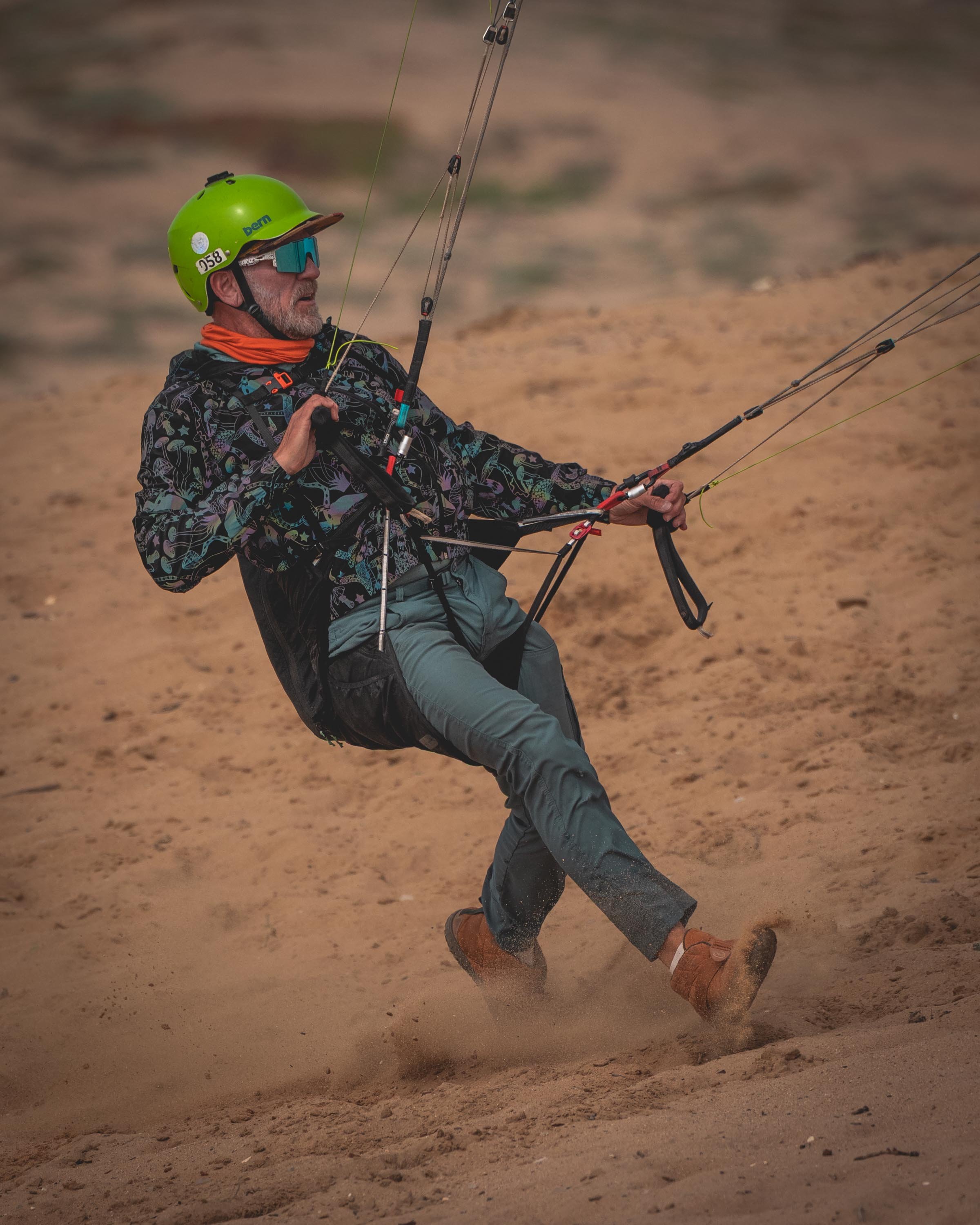
Mick Knutson
BASE jumper since 1992
Founder of BLiNC Magazine
BASE #454 | El Capitan #113
IPBC competitor (late 1990s–early 2000s)
Host and moderator of the BASE Fatality List since 2007
Speed flying, paragliding, and parakiting since 2009
Cynthia Currie
Owner at Raven Wolf Sky Sports
Skydiving Tandem Instructor / Evaluator / AFFI
Started Skydiving in 2002
Started Wingsuit in 2004
BASE jumper since 2012
WS BASE since 2013
Paragliding and Speed Flying Advanced Instructor / Tandem Instructor
The Bottom Line
Canopy emergencies don’t start at impact.
They start at opening—and end only when you’re safely on the ground.
This course exists to make sure you’re ready for everything in between.